Absheron Tour
Tours & tickets

Hand-picked by our editors — only the best 5 experiences from 47 reviewed.

Open today 09:00–17:00
Attendance: Moderate — autumn season
Ensure you arrive early to avoid intense heat and crowds.
Free cancellation Instant confirmation Mobile voucher Skip-the-line Verified partner
Tickets

Choose your ticket

Verified partners for every tour, free cancellation where available, and instant confirmation on every booking.

Baku: Gobustan, Mud Volcanoes & Absheron Full-Day Tour 7 hr
Guided Experience

Baku: Gobustan, Mud Volcanoes & Absheron Full-Day Tour

★ 4.8 (1675)
$14
per person
Instant Mobile voucher Flexible — change up to 24h

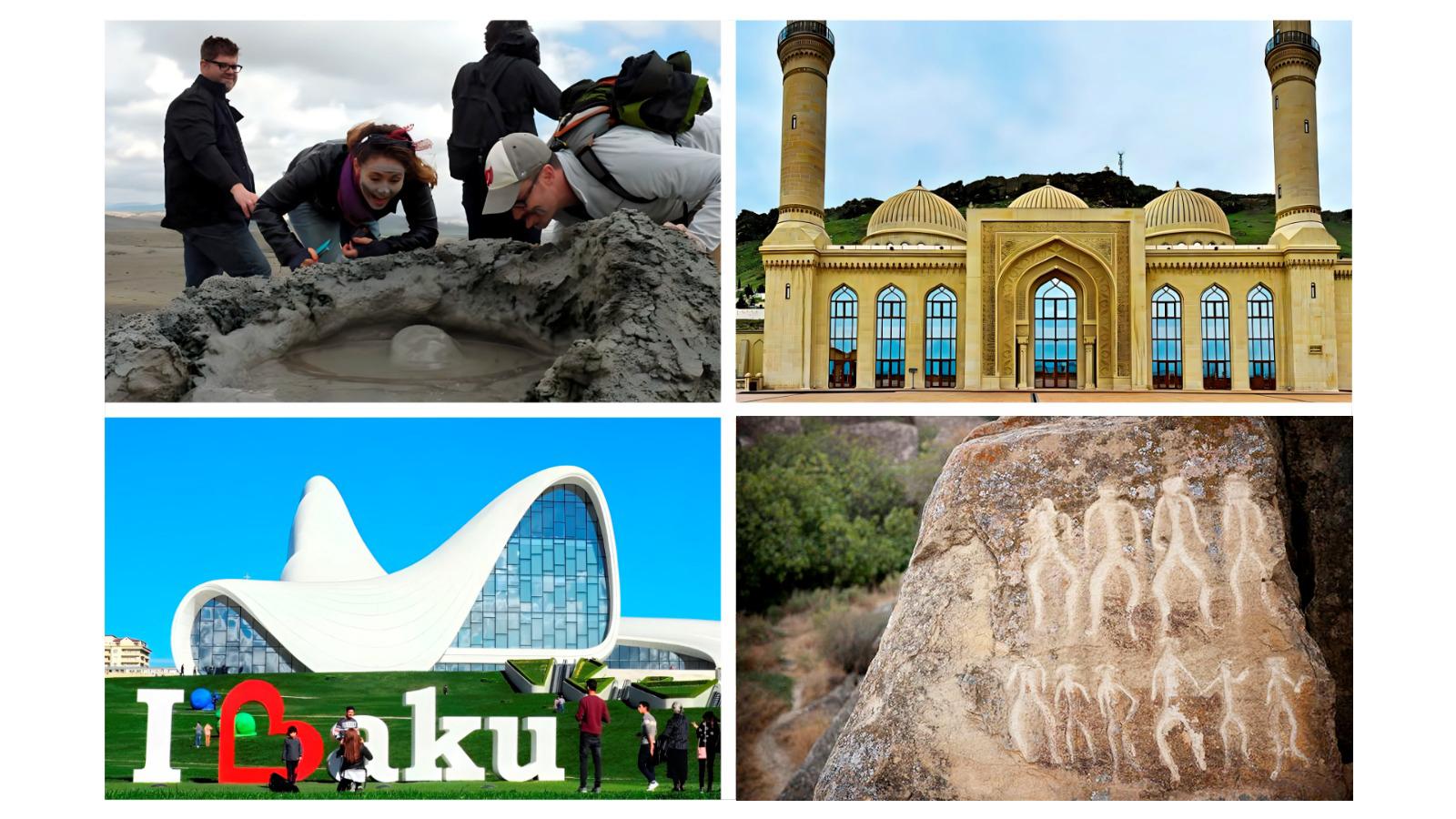
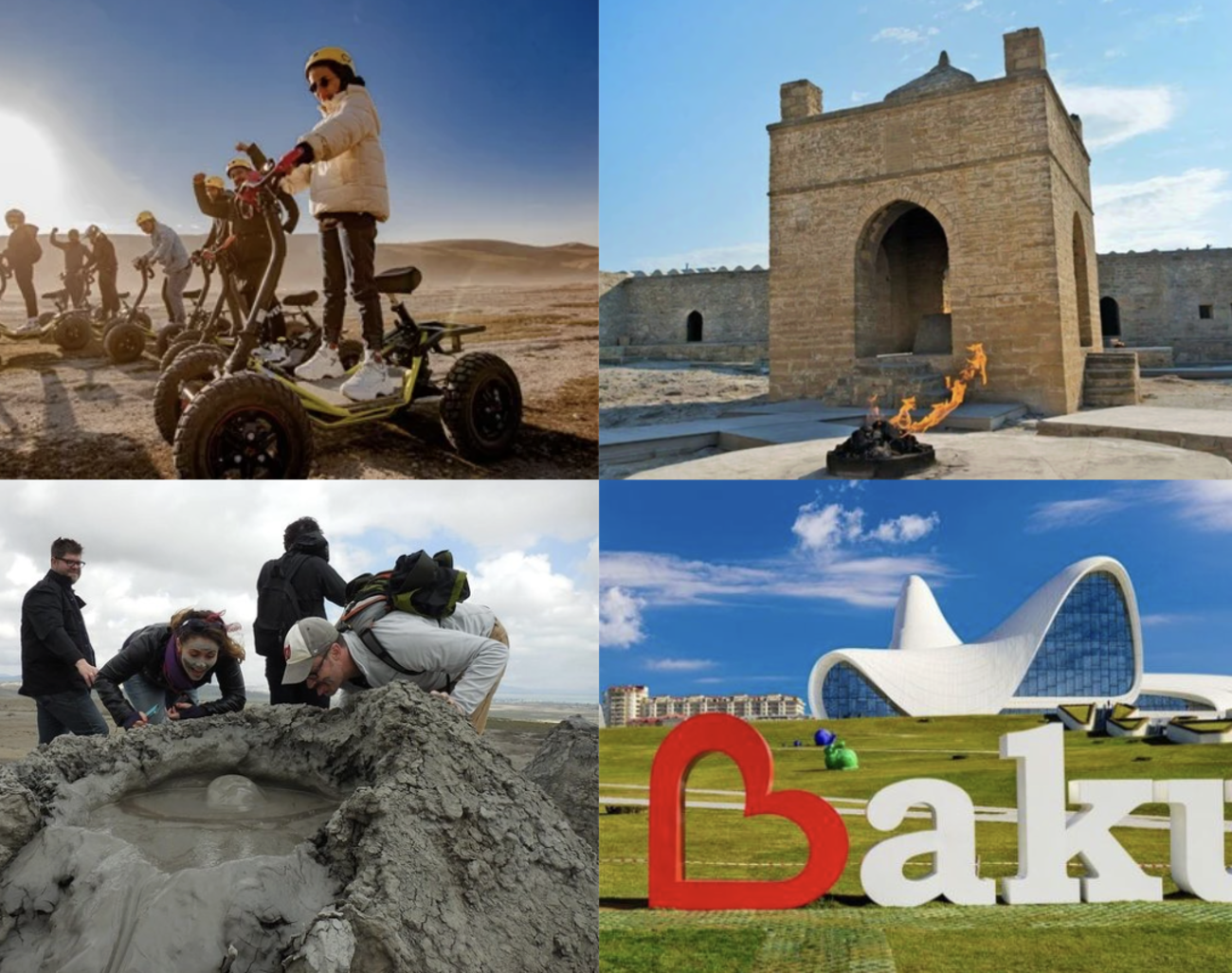
Petroglyphs, bubbling mud volcanoes, fire temples and modern Baku landmarks in one day.

Reserve
Baku Full-Day Tour: Gobustan, Mud Volcanoes & Absheron 8 hr
Guided Experience

Baku Full-Day Tour: Gobustan, Mud Volcanoes & Absheron

★ 4.8 (530)
$14
per person
Instant Mobile voucher Flexible — change up to 24h

Petroglyphs, bubbling mud volcanoes, fire temples and Caspian coast views on one all-inclusive day trip.

Reserve

Prices from verified partners. Availability updates in real time at checkout. Free cancellation policies apply where shown.

What you'll do

Inside a tour, step by step

  1. 01 1h

    Museum Visit

    Explore interactive exhibits on prehistoric life

  2. 02 1.5h

    Petroglyph Hike

    Walk designated paths to see 6,000+ carvings

  3. 03 1h

    Mud Volcanoes

    Visit nearby active geological sites

Highlights

What you'll see inside the attraction

The landmarks, rooms, and views travelers on this tour remember — all visible on a single visit.

Petroglyph Museum

Explore the history behind 6,000+ prehistoric rock engravings found in the park.

Ancient Cave Dwellings

View the archaeological sites where early humans lived for millennia.

Mud Volcano Complex

Witness the surreal activity of the world's most famous natural mud vents.

Gaval Dash

Discover the unique 'musical' stone that produces chime-like sounds when hit.

Head to head

Gobustan Absheron Tour vs Independent Exploration — Which suits your travel style?

Guided options provide seamless transport to UNESCO heritage sites, while self-guided travel offers superior freedom for those preferring to set their own pace. Travelers often find that a professional gobustan absheron tour effectively bridges the gap between regional landmarks and the logistical hurdles of remote desert travel.

Feature Top pick Guided Tour Independent Exploration
Logistics
Requires private vehicle hire
Cost Complexity
Multiple payments for separate services
Time Flexibility
Fully customizable itinerary
Access to Remote Sites
Variable based on vehicle capabilities
Depth of Historical Context
Relies on signage and personal research
Physical Exertion
Dictated by individual exploration speed

Verdict: Securing gobustan absheron tour tickets is ideal for efficient sightseeing, whereas independent exploration rewards travelers who prioritize complete control over their daily schedule.

How your ticket works

Book your ticket in 3 steps

  1. 01

    Book online

    Choose your ticket, select your date, and reserve in under two minutes. Secure checkout handled by our verified partner.

  2. 02

    Receive your mobile voucher

    Instant confirmation by email, with a mobile voucher you can save offline. No printing, no queuing at a collection desk.

  3. 03

    Show & enter

    Arrive at the entrance, show your voucher on your phone, and walk in. Most tickets include priority or skip-the-line access.

Plan your visit

Everything you need to know before you go

Practical details for your visit straight from our verified partners — hours, access, rules, and how to get there.

Open today · 09:00–17:00
Opening Hours
09:00–17:00 daily
Address
Qobustan, Garadagh district, Baku, Azerbaijan
Accessibility
Some paths wheelchair-accessible
Best arrival window
09:00–11:00
Storage
Not available on-site
Official site
https://gobustan.org
Mon
09:00–17:00
Tue
09:00–17:00
Wed
09:00–17:00
Thu
09:00–17:00
Fri
09:00–17:00
Sat
09:00–17:00
Sun
09:00–17:00
Closed on: Jan 1 (New Year's Day)
Main entrance

Gobustan National Park Entrance

Qobustan, Garadagh district

Main gate parking area

Address
Qobustan, Garadagh district, Baku, Azerbaijan
Storage
Not available on-site
Official site
https://gobustan.org

How to get there

🚗
Car · 1h · None

Follow the Baku-Qobustan highway for approximately 67km southwest

🚕
Taxi · 1h · 40–60 AZN

Hire a private taxi from Baku for a round-trip excursion

Dress code

Wear comfortable walking shoes suitable for rocky, uneven terrain. Dress in layers as desert temperatures fluctuate throughout the day.

Bags & security

Keep belongings minimal. There are no lockers at the site, so carry only what you need for your gobustan absheron tour.

Photography

Photography is permitted in outdoor areas and the museum. Tripods may be restricted in crowded petroglyph zones.

Accessibility

The visitor center and certain museum sections are wheelchair-accessible. The natural terrain of the petroglyph site is rugged and difficult for mobility aids.

Mobile phones

Mobile signal is available in most areas. Use your phone to coordinate with your private driver during your gobustan absheron tour.

What to bring

  • Water bottle
  • Sunscreen
  • Sunglasses
  • Hat
  • Comfortable shoes
  • Small daypack

Not allowed

  • Spray paint
  • Alcohol
  • Drones
  • Sharp tools
  • Large hiking backpacks
  • Glass bottles
  • Radios
  • Professional lighting equipment

Families & strollers

The museum provides interactive exhibits suitable for children. Always supervise minors near the uneven rocks and mud volcanoes.

Food & drink

No food or drink facilities are available at the remote mud volcano sites. Carry sufficient water for your entire gobustan absheron tour.

Pets

Pets are not permitted inside the protected archaeological areas. Service animals may be exempt with prior documentation.

Good to know

The 10 AZN entrance fee covers both the museum and outdoor park areas. Always confirm your taxi or driver details before starting your gobustan absheron tour.

Meeting point

Where to find us

Gobustan National Park Entrance

Qobustan, Garadagh district

Main gate parking area

Get directions
Around your visit

Everything else worth knowing

Best time to go, insider tips, nearby landmarks, and the cancellation fine print — flip through to skim what matters to you.

Best time to visit

How crowds, weather, and events shift across the year.

Spring

Mild temperatures make hiking the rock art trails very comfortable.

Autumn

Optimal weather for exploring the Absheron Peninsula desert sites.

Summer

Expect intense heat; prioritize early morning tours before 11:00.

Winter

Winds can be strong; prepare for cooler, exposed conditions.

Helpful tips for your visit

Small details that turn a good visit into a great one.

Avoid Midday

Start your visit between 09:00–11:00 to avoid heat and buses.

Wear Proper Shoes

The rocky trails are slippery; avoid sandals during your gobustan absheron tour.

Respect the Rocks

Do not touch the ancient petroglyphs; they are fragile and protected.

Bring Cash

Keep small manat denominations for potential tips or small purchases.

Use a Guide

A licensed guide enhances the storytelling of the carvings.

Nearby landmarks

Non-bookable sights within a short walk — free to visit, easy to pair.

Gaval Dash

15 min drive

A unique musical stone that produces metallic sounds when struck.

Mud Volcanoes

15 min drive

A cluster of active, bubbling geological formations unique to the region.

Cancellation policy

Flexible, no hidden fees.

Tickets are generally non-refundable once issued. Confirm availability for your specific date before booking your gobustan absheron tour.

Where to stay

Hotels & districts near the attraction

Hand-picked options within walking distance — pick a district for vibe, or a specific hotel for convenience.

Baku City Hotels

1h
luxury

Standard urban hotels offering various amenities in the capital.

Qobustan Local Stays

10 min
budget

Limited guesthouses located near the park outskirts.

About

The place, in context

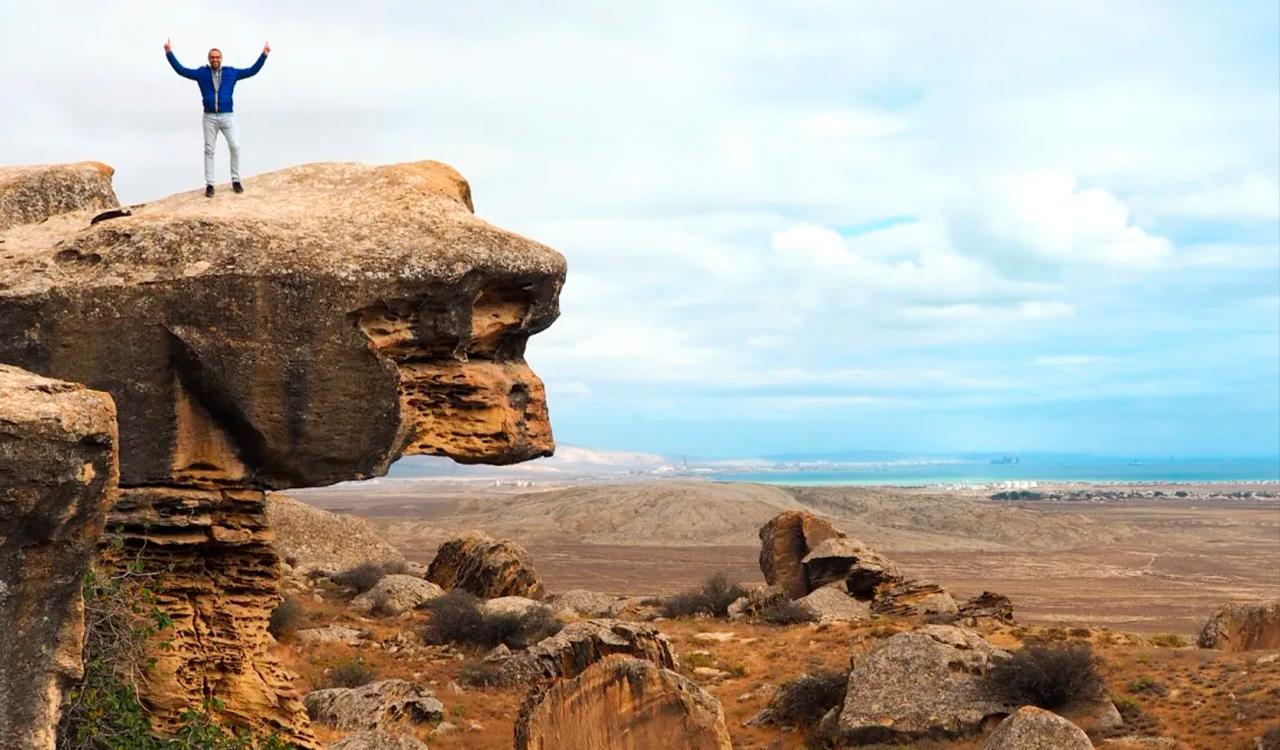
Six thousand rock engravings cover the limestone terraces of Gobustan National Park, carved between 40,000 BCE and the medieval period by successive waves of hunters, herders and Silk Road travellers. The site gained UNESCO World Heritage status in 2007 for its unbroken chronicle of human settlement — stone panels depict aurochs hunts, ritual dances, celestial observations and reed boats that predate Egypt's papyrus craft by three millennia. Archaeologists identify twelve distinct carving styles, from Paleolithic stick figures to Bronze Age chariots, layered across fifty-seven square kilometres of semi-desert where the Greater Caucasus slopes into the Caspian basin. Gobustan Absheron tour itineraries combine the petroglyph reserve with the region's volcanic phenomena: the Absheron Peninsula cradles over three hundred mud volcanoes, more than half the world's terrestrial total, fed by deep methane deposits that bubble grey slurry into low cones across the steppe. The largest clusters lie thirty minutes south of the rock art site, accessible via dirt tracks that wind through saxaul scrubland. Zoroastrian fire worship took root here in the first millennium BCE, sustained by natural gas seeps that ignite into perpetual flames — Ateshgah Fire Temple and Yanar Dag burning hillside preserve this tradition, their controlled vents a counterpoint to the cold mud below. The national park's interactive museum, opened in 2011, houses artefacts from fifty excavation seasons: flint microliths, ochre grinding stones, ceramic shards stamped with Kura-Araxes triangles. Vitrines trace the site's strategic importance as a Silk Road waypoint, where caravans paused to water camels at seasonal springs now marked by medieval graffiti in Arabic and Armenian scripts. Display panels explain the region's geology — the sedimentary folds that trapped Caspian oil reserves also shaped the overhangs where Stone Age artists worked, protected from wind and rain. Park rangers lead morning walks to Beyukdash summit, where a Roman inscription from Legio XII Fulminata, carved in 84 CE, marks the empire's easternmost boundary. Full-day tours from Baku depart before rush hour, covering one hundred twenty kilometres round-trip through industrial zones that yield to open steppe. The Gobustan Absheron tour route threads past Soviet-era drilling rigs and new wind farms, infrastructure that coexists with landscapes unchanged since the Holocene. Entry to the petroglyph zone requires a ten-manat conservation fee for foreign visitors, collected at the museum gatehouse where guides brief groups on the fragility of the engravings — touching the rock face accelerates erosion by transferring skin oils into porous limestone.

"Twelve distinct carving styles layer across terraces where Stone Age artists worked beneath protective overhangs, shielded from the steppe wind."
Your experience

What a tour day looks like

A step-by-step walkthrough of the visit — what you'll see, how long each stage takes, and the details that matter.

You arrive at the museum gatehouse by nine thirty, pay the ten-manat admission and join a ranger-led group ascending the marked trail to Beyukdash plateau. The path switchbacks through low scrub, reaching the first engraved panel within twelve minutes — a herd of goats rendered in confident pecked lines, each animal's horns curving back toward a vanished horizon. Your guide points out the patina差异: older carvings weather to rust-brown, medieval additions remain pale grey. You crouch to photograph a boat scene, careful not to touch the surface, then continue to the overlook where a Roman legion inscribed its presence two thousand years ago. After ninety minutes among the petroglyphs, the group returns to the vehicles and drives south toward the mud volcano field. The road deteriorates into gravel; you pass a shepherd's lean-to before reaching the geothermal zone, where grey cones bubble methane-rich slurry every few seconds. The largest crater measures four metres across, its surface crusted and cracked. You circle the perimeter, boots crunching on dried mud, then proceed to Yanar Dag for a late-afternoon visit. Flames lick a ten-metre section of hillside, fed by underground gas — the heat is palpable at five paces. You linger through dusk as the fire brightens against fading daylight, then board the return shuttle to Baku, arriving by seven.

Frequently asked

Frequently asked questions about gobustan absheron tour tours

What are the opening hours for a gobustan absheron tour?

The park is open daily from 09:00–17:00.

Is the entrance fee for a gobustan absheron tour included?

The general admission entrance fee is 10 AZN for foreign visitors.

When is the best time for a gobustan absheron tour?

Plan your visit between 09:00–11:00 to avoid peak crowds and heat.

Are there guided options for the gobustan absheron tour?

Yes, professional guides are recommended to provide historical context during your gobustan absheron tour.

Is the site wheelchair-accessible during a gobustan absheron tour?

Some museum areas are accessible, but the outdoor park terrain is uneven.

Can I bring food on my gobustan absheron tour?

It is advised to bring your own water and snacks as there are no food vendors on-site.

Are there mud volcanoes on the gobustan absheron tour?

Yes, most tours include a visit to the nearby mud volcanoes found on the Absheron Peninsula.

How do I get to my gobustan absheron tour?

The best way is to hire a private taxi from Baku for your gobustan absheron tour.

Can I book gobustan absheron tour tickets online?

You can purchase your gobustan absheron tour tickets through various local travel operators or the official site.