
7 hr
Baku Full-Day Tour: Gobustan, Mud Volcanoes & Absheron
Petroglyphs, mud volcanoes by 4x4, fire temples and Baku's modern icons in one 7-hour day trip.
Reserve
Hand-picked by our editors — only the best 5 experiences from 12 reviewed.
Verified partners for every tour, free cancellation where available, and instant confirmation on every booking.
7 hr
Petroglyphs, mud volcanoes by 4x4, fire temples and Baku's modern icons in one 7-hour day trip.
Reserve
8 hr
Discover ancient rock art, bubbling mud volcanoes, and eternal flames on this cultural journey through Azerbaijan's heritage.
Reserve
8 hr
UNESCO petroglyphs, bubbling mud volcanoes, eternal flames, and Azerbaijan's oil heritage in one day
ReservePrices from verified partners. Availability updates in real time at checkout. Free cancellation policies apply where shown.
The landmarks, rooms, and views travelers on this tour remember — all visible on a single visit.
Natural gas flames burning continuously for centuries on a rocky hillside.
Indoor pavilion with multimedia exhibits on fire history and geology.
An open-air collection of ancient stone artifacts like millstones and carvings.
Elevated wooden path offering panoramic views of the fire and landscape.
Historical remnants reflecting the ancient practice of fire worship in the region.
They complement each other, yet most visitors who do both find Yanar Dag the more visceral natural wonder while Ateshgah provides the deeper cultural narrative. An absheron day tour tours these two primary sites to offer a complete view of the region's burning heritage.
| Feature | Top pick Yanar Dag | Ateshgah Fire Temple |
|---|---|---|
Origin |
Geological gas seepage | Human-constructed shrine |
Primary experience |
Perpetual natural flames | Historical Zoroastrian sanctuary |
Time required |
30–60 minutes | 1–2 hours |
Historical significance |
Ancient geological phenomenon | 17th-century religious site |
Atmosphere |
Open-air natural hillside | Walled stone architecture |
Absheron day tour tickets |
15 AZN (inclusive) | 15 AZN (inclusive) |
| See tickets → |
Verdict: Prioritize the natural landscape of Yanar Dag for a raw visual experience, or select the Ateshgah Fire Temple if your absheron day tour tour interest leans toward ritual history and enclosed architectural design.
Choose your ticket, select your date, and reserve in under two minutes. Secure checkout handled by our verified partner.
Instant confirmation by email, with a mobile voucher you can save offline. No printing, no queuing at a collection desk.
Arrive at the entrance, show your voucher on your phone, and walk in. Most tickets include priority or skip-the-line access.
Practical details for your visit straight from our verified partners — hours, access, rules, and how to get there.
Casual and comfortable clothing is appropriate for your absheron day tour. Wear sensible walking shoes as the terrain around the hillside can be uneven.
Standard backpacks are permitted, but please be aware that the administration is not responsible for lost or damaged personal belongings. Security personnel are present to ensure visitor safety at the absheron day tour site.
Personal photography is permitted for most areas of the absheron day tour reserve. Professional video and photo shoots require prior coordination with the reserve administration.
The site features wheelchair-accessible paths to allow guests to view the flames comfortably. Please contact the reserve ahead of your absheron day tour if you require specific assistance.
Mobile phones are permitted throughout the reserve. Use them to capture photos of the natural fire during your absheron day tour experience.
The absheron day tour is family-friendly, featuring educational displays in the museum. Children must be supervised by adults at all times while near the fire site.
There are no restaurants inside the main fire site of the absheron day tour. It is recommended to bring bottled water, especially during warmer afternoons.
Pets are generally not permitted within the fenced reserve areas of the absheron day tour. Service animals may be allowed with advance notification.
The 15 AZN conservation fee covers access to both main fire sites for foreign citizens. Always keep your ticket handy throughout your absheron day tour.
Best time to go, insider tips, nearby landmarks, and the cancellation fine print — flip through to skim what matters to you.
Flexible, no hidden fees.
Full refunds are typically provided for cancellations made within the operator's specified window. Ensure you check the specific booking terms for your absheron day tour tickets before purchase.
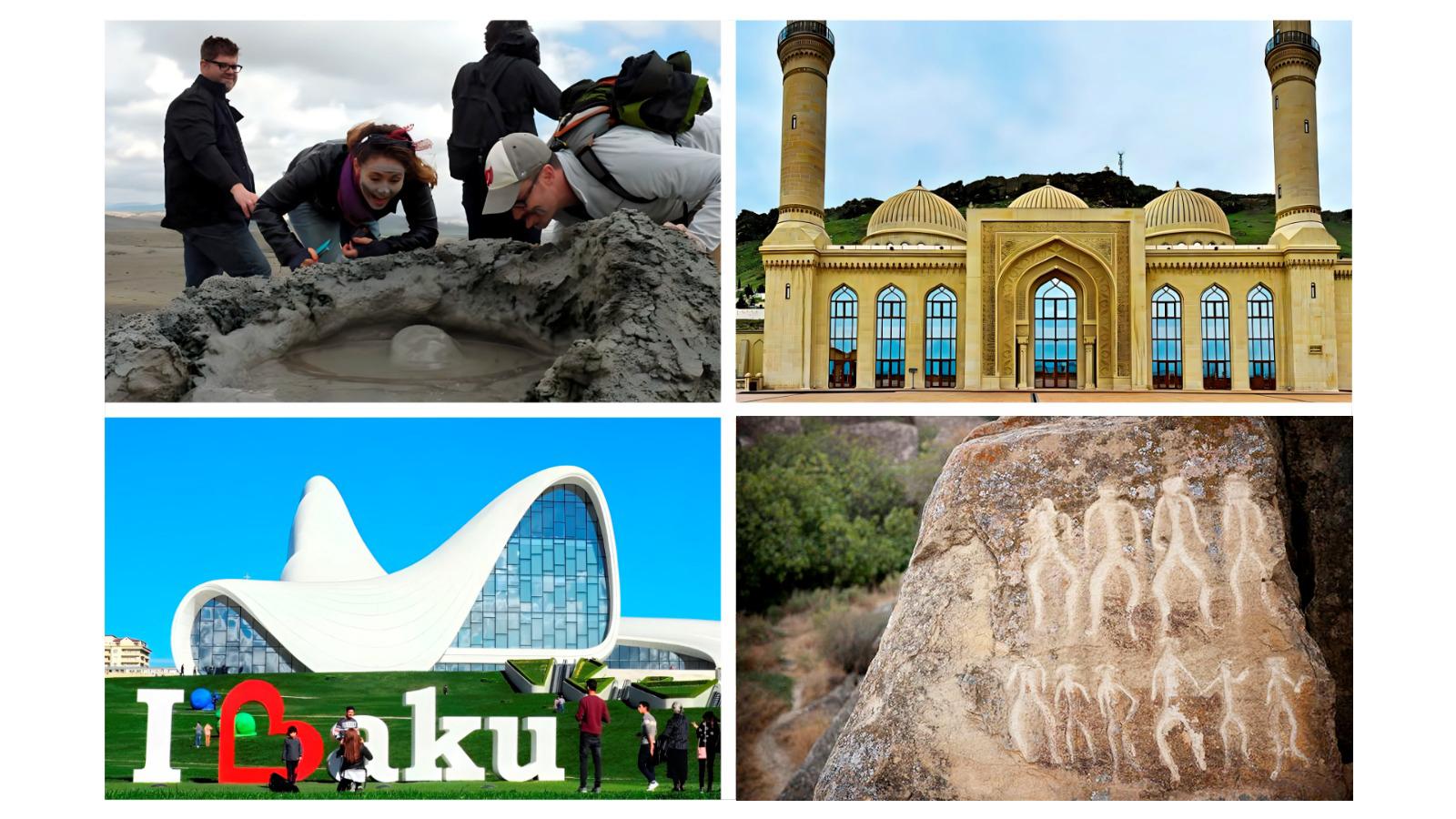
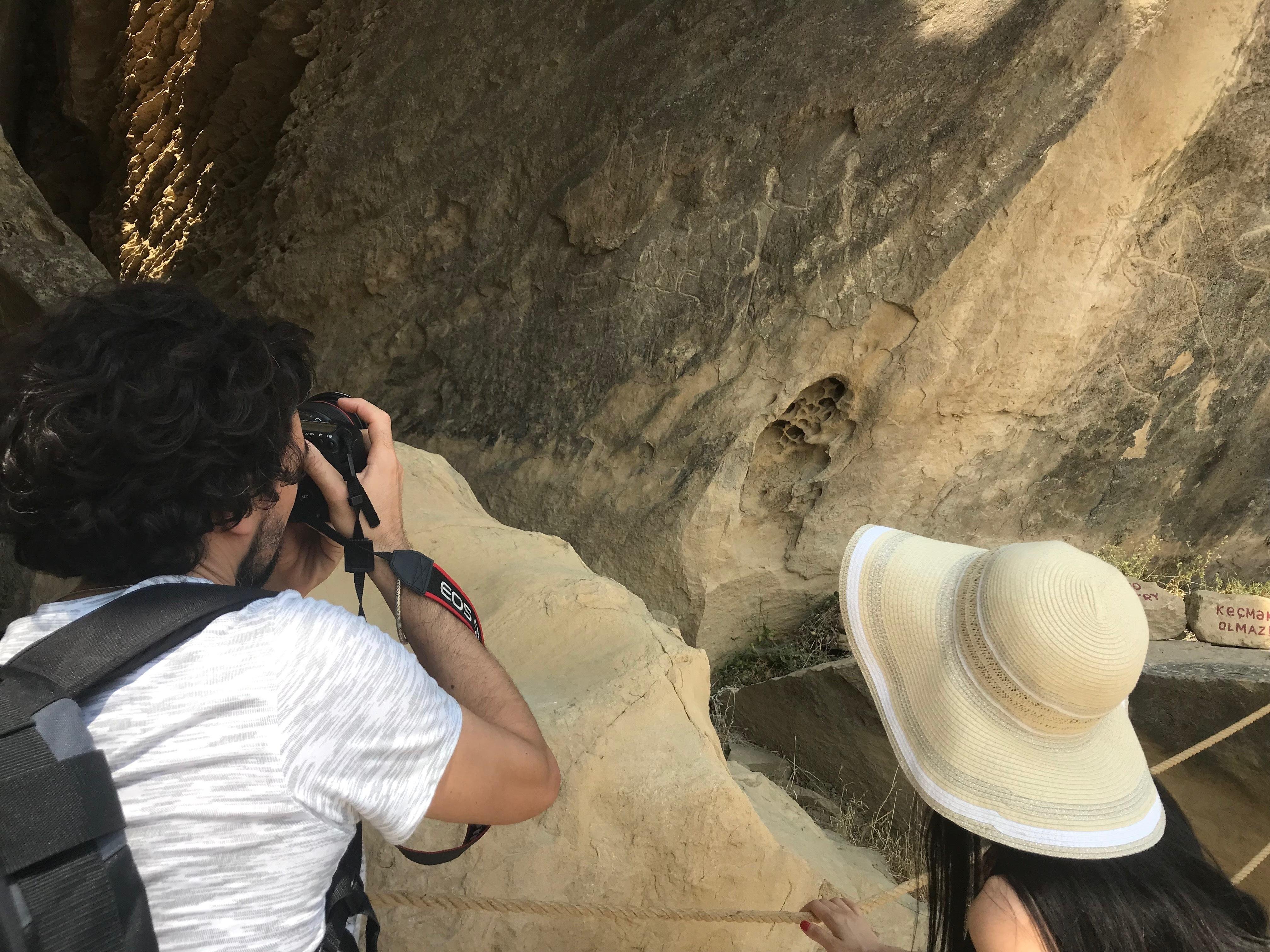
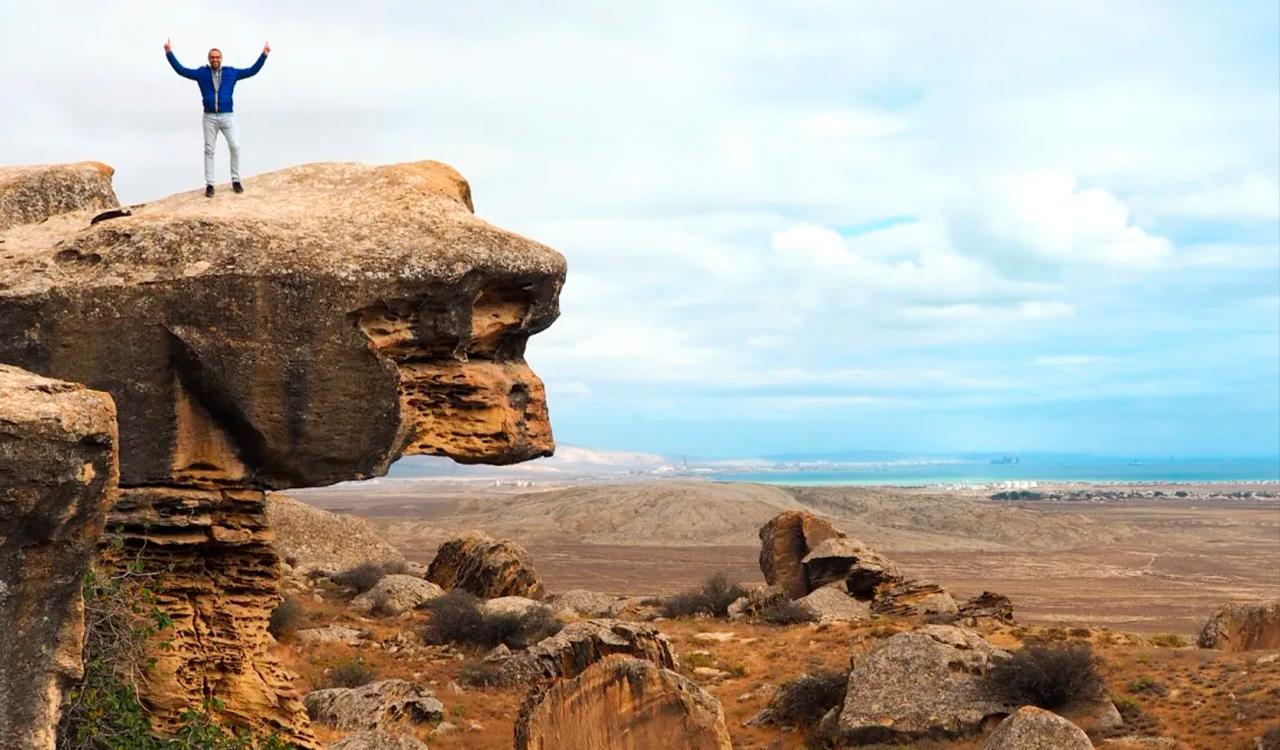
The Absheron Peninsula holds 40,000 years of human history in a single day's drive. At Gobustan, some 6,000 petroglyphs carved between the Upper Paleolithic and the Middle Ages sprawl across 537 hectares of limestone outcrops, earning UNESCO World Heritage status in 2007. The images—aurochs, dancers, solar symbols, reed boats—document millennia of settlement, ritual and migration along the western shore of the Caspian. The surrounding landscape is equally volatile: more than 300 of the planet's estimated 800 mud volcanoes cluster in eastern Azerbaijan, many within sight of the Gobustan reserve. These cold seeps of methane-laden clay erupt at intervals measured in decades, leaving behind grey craters and miniature cones that hiss and bubble year-round. The peninsula's other claim lies in its subterranean gas. Natural methane seeps have burned continuously for centuries at Yanar Dag, a 10-metre stretch of hillside flame fed by pressurized deposits below the Cretaceous sandstone. Before Soviet engineers drilled the Surakhani field in the 1950s, dozens of similar vents burned across Absheron, giving rise to Zoroastrian fire temples and the region's enduring association with eternal combustion. The 17th-century Ateshgah temple complex, built by Baku's Indian trading community, surrounds a central altar once fed by a natural vent; today the flame is piped, but the pentagonal caravanserai and inscribed Sanskrit plaques remain. Modern Absheron day tour itineraries thread these sites into an eight-to-ten-hour circuit from Baku, typically pairing Gobustan's petroglyphs with a mud volcano field—Dashgil or Garasu—before continuing to Yanar Dag and occasionally Ateshgah. The peninsula's proximity to the capital (Gobustan lies 64 kilometres southwest, Yanar Dag 27 kilometres northeast) makes the loop feasible without an overnight, though summer midday temperatures regularly exceed 35°C. The conservation fee for foreign visitors grants access to both Yanar Dag and Ateshgah; Gobustan charges separately. Guides interpret the petroglyphs in situ, where Quaternary terraces and the receding Caspian shoreline frame the carvings against a stark, treeless horizon.
"More than 300 of the planet's estimated 800 mud volcanoes cluster in eastern Azerbaijan, many within sight of the Gobustan reserve."
A step-by-step walkthrough of the visit — what you'll see, how long each stage takes, and the details that matter.
You leave Baku before the heat takes hold, heading southwest across the arid steppe toward Gobustan. The reserve's entrance lies at the foot of eroded limestone ridges; from there you walk a graded path to the first cluster of petroglyphs. Your guide points out a line of aurochs, their horns exaggerated, then a circle of dancers and a reed boat scratched into a vertical face. The silence is absolute except for wind over stone. An hour later you stand at the edge of a mud volcano field. Grey cones the size of anthills bubble and spit; larger craters hold pools of viscous clay. You photograph the miniature eruptions, careful not to step into the warm slurry. The drive north takes you past Surakhani and on to Yanar Dag. The hillside flame appears first as a shimmer, then as a continuous sheet of fire licking 10 metres of exposed rock. You walk the viewing path as dusk approaches, the orange glow intensifying against the dimming sky. If the itinerary includes Ateshgah, you finish there, circling the pentagonal courtyard and reading the worn Sanskrit inscriptions by floodlight before returning to Baku after dark.
The reserve is open daily from 10:00–19:00. Plan your visit accordingly to ensure a full experience.
Entrance is 15 AZN per person for foreign citizens, which covers the main fire sites. Always check your booking confirmation for included tour costs.
Yes, the natural gas seep ensures the fire burns continuously throughout the year, regardless of rain or snow. It is the highlight of every absheron day tour.
Yes, guided absheron day tour tours are available and often recommended to provide historical context regarding the Land of Fire.
The best arrival window is 10:00–18:00 to ensure visibility, though evening visits offer a more dramatic view of the flames. Most guests prefer a late afternoon start for their absheron day tour.
Yes, you can combine your absheron day tour with a visit to the Ateshgah Fire Temple for a deeper look at regional history.
Yes, the site provides wheelchair-accessible paths. We recommend verifying specific needs before starting your absheron day tour.
Bring comfortable walking shoes, a camera, and water. A hat is helpful for sun protection during your absheron day tour.
Yes, children are welcome. Please ensure they remain supervised at all times while exploring the reserve during your absheron day tour.